Katana Radiant Wheel Oroshigane Kobuse Blade Kōrin Koshirae 永輪 | TangGu Sword
Folded Oroshigane Steel Shinken (真剣) | Radiant Wheel Katana: TangGu (湯谷) Oroshigane (卸し金) Kobuse Blade (甲伏造) + TangGu (湯谷) Kōrin Koshirae (光輪拵)
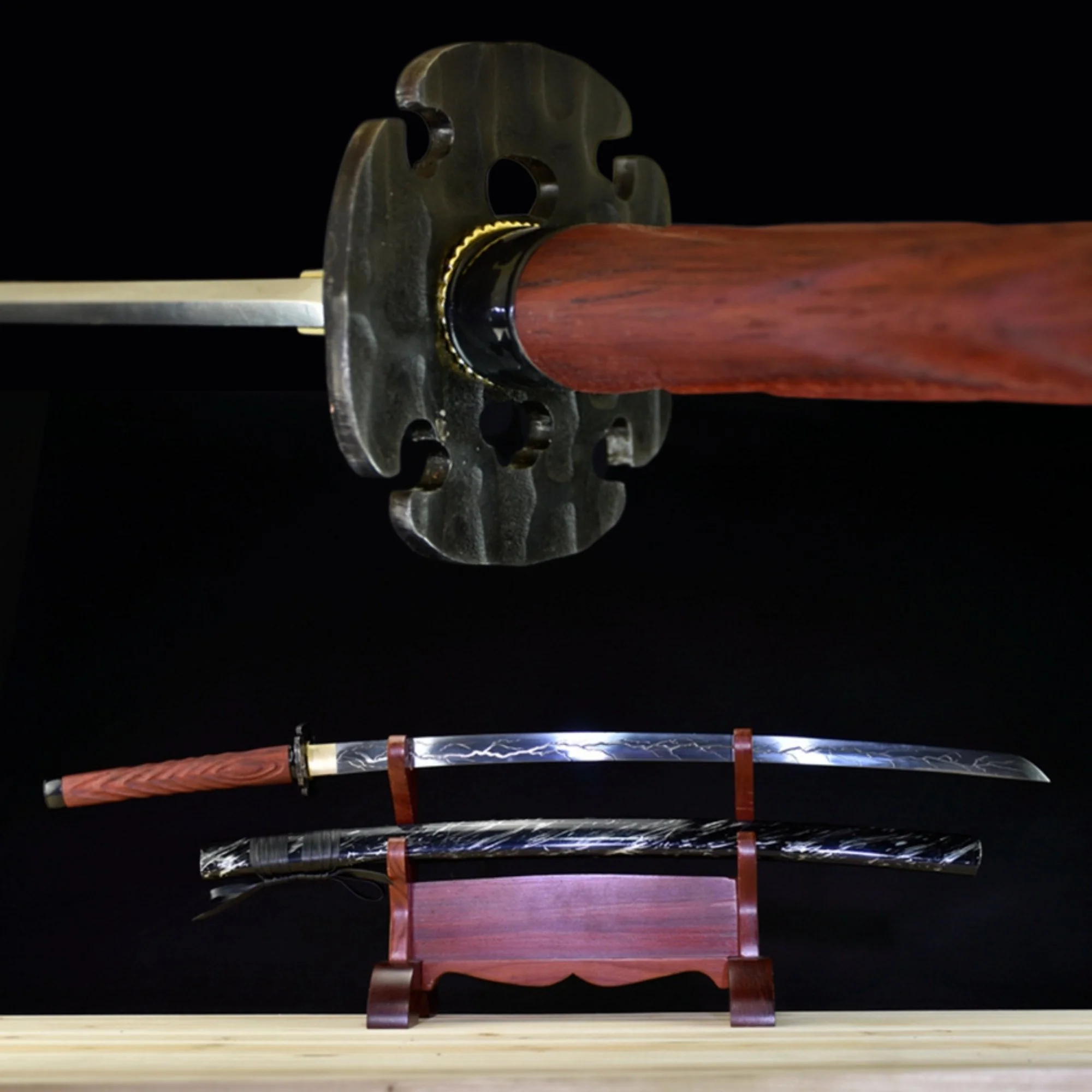
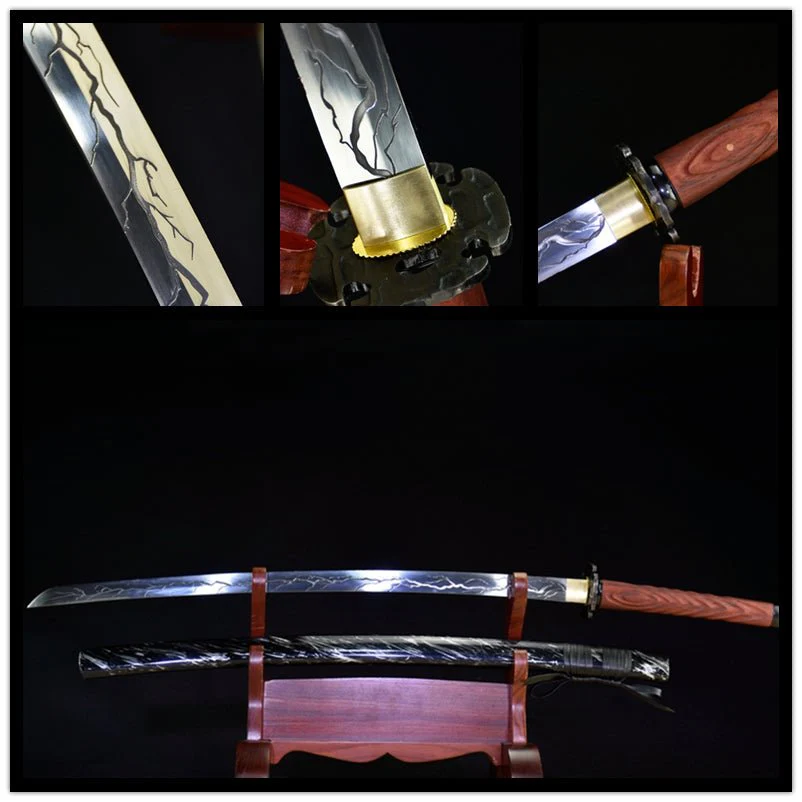
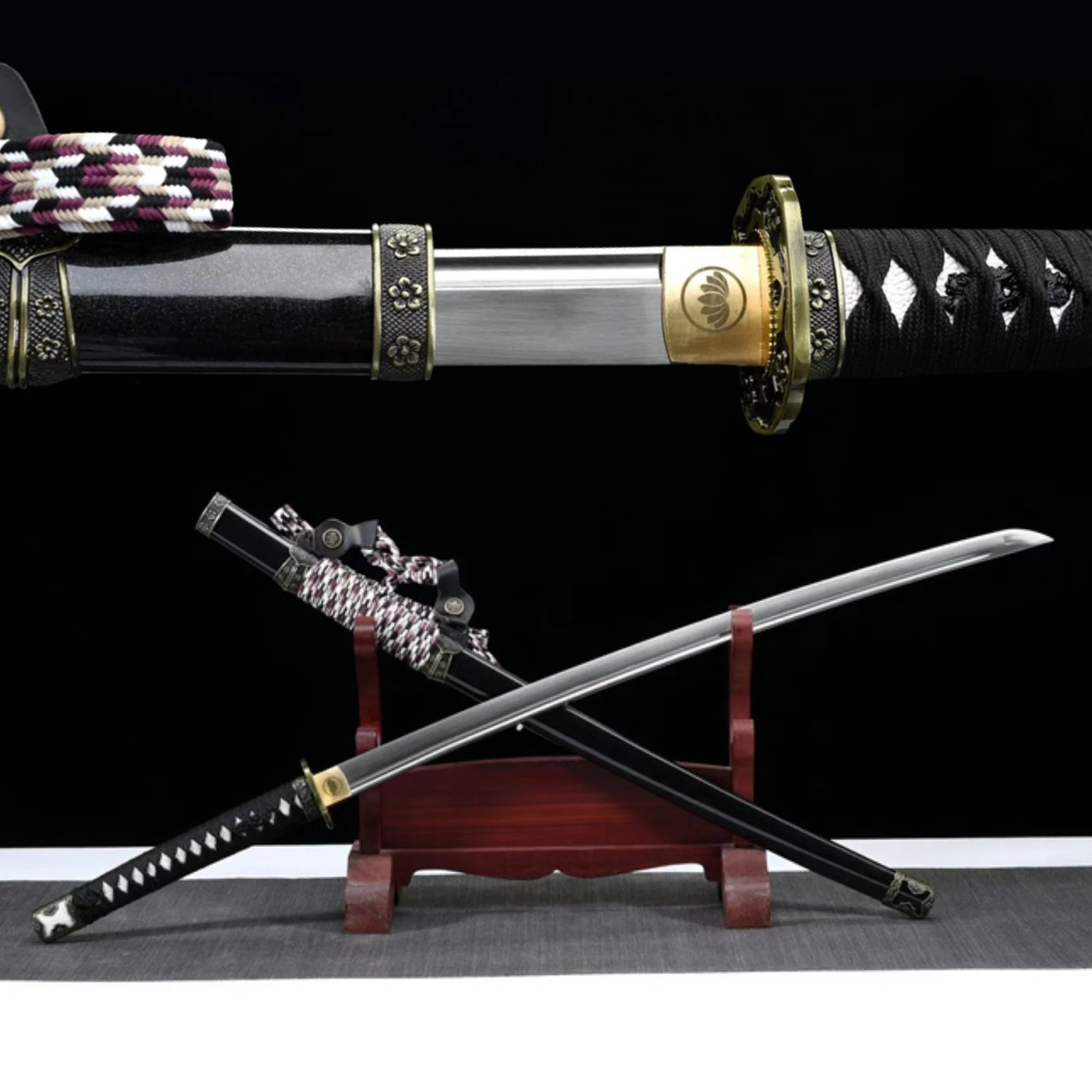
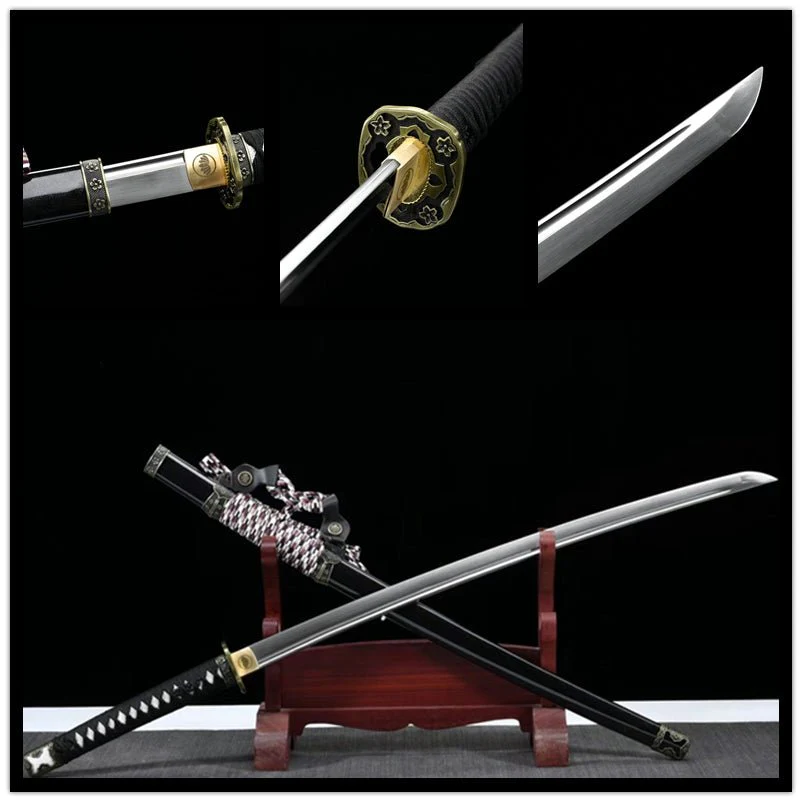
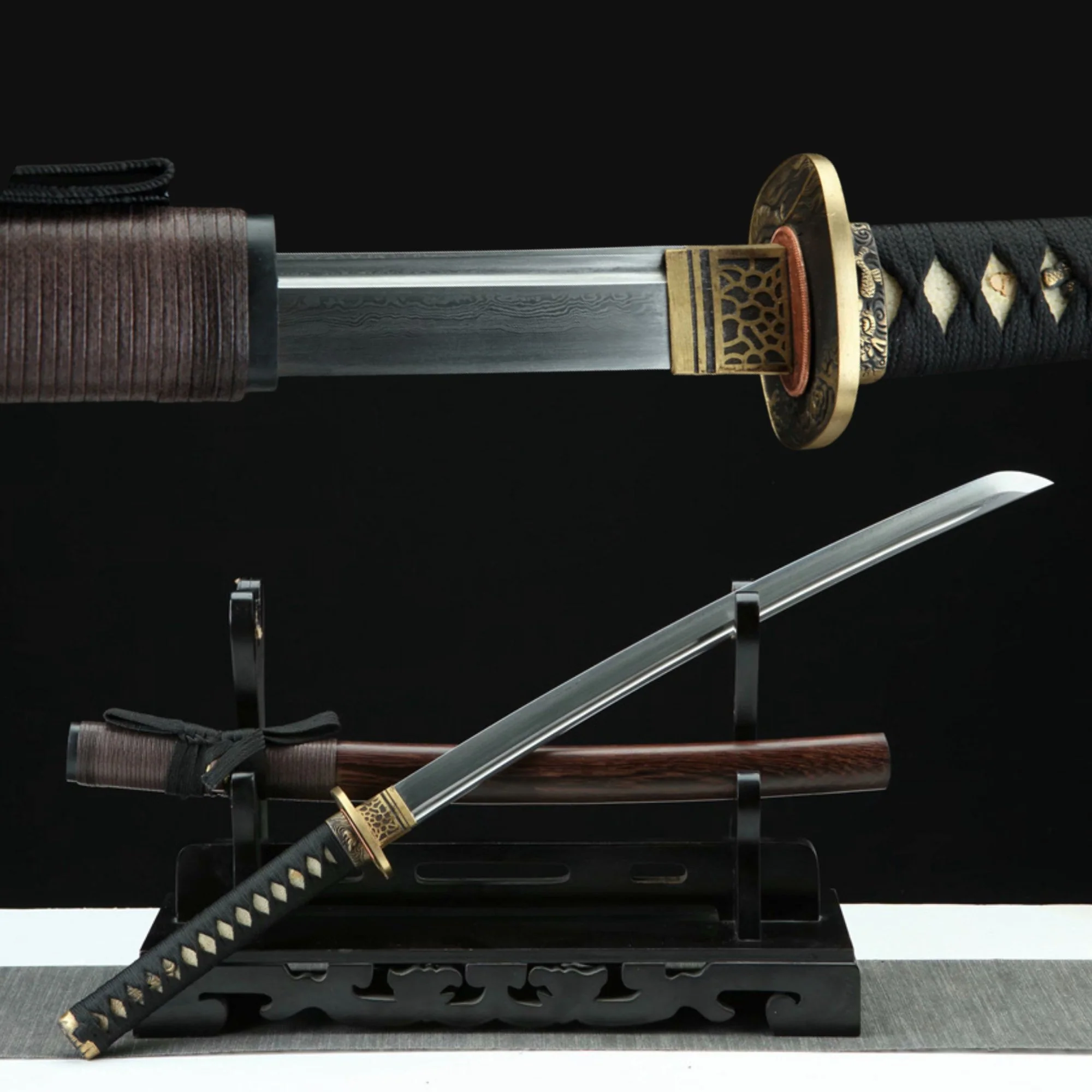
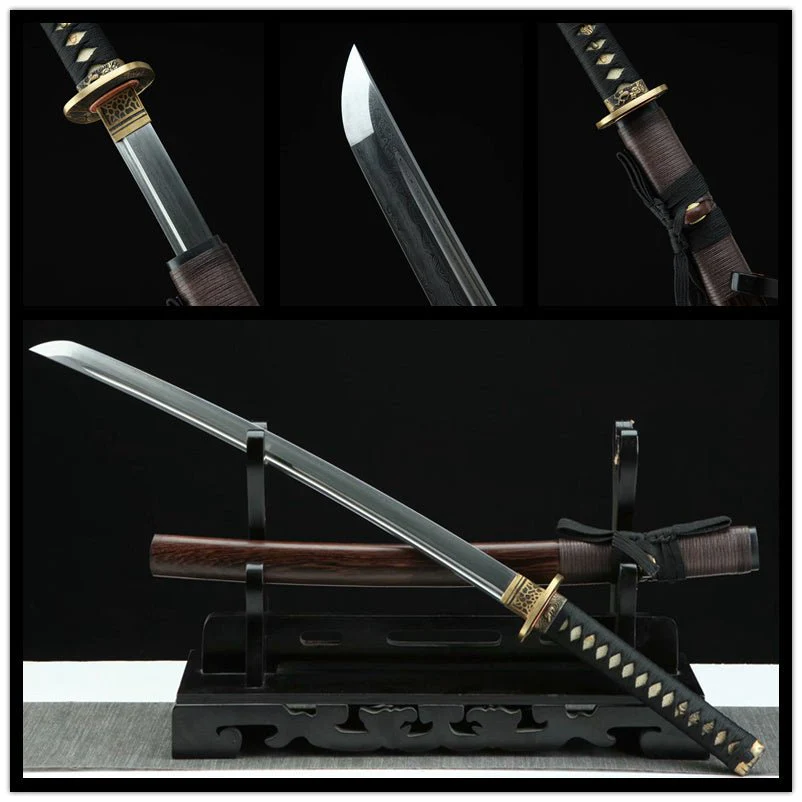
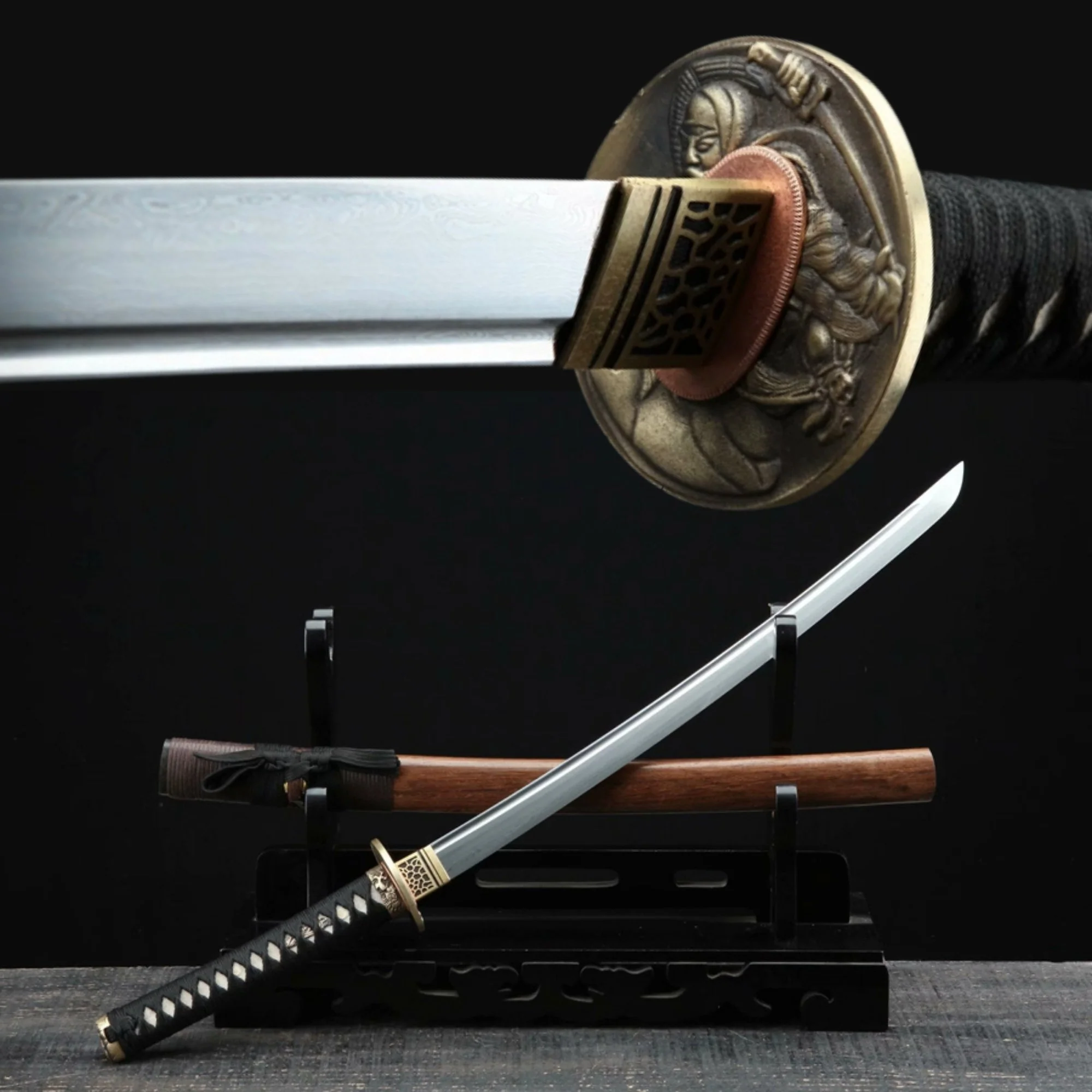
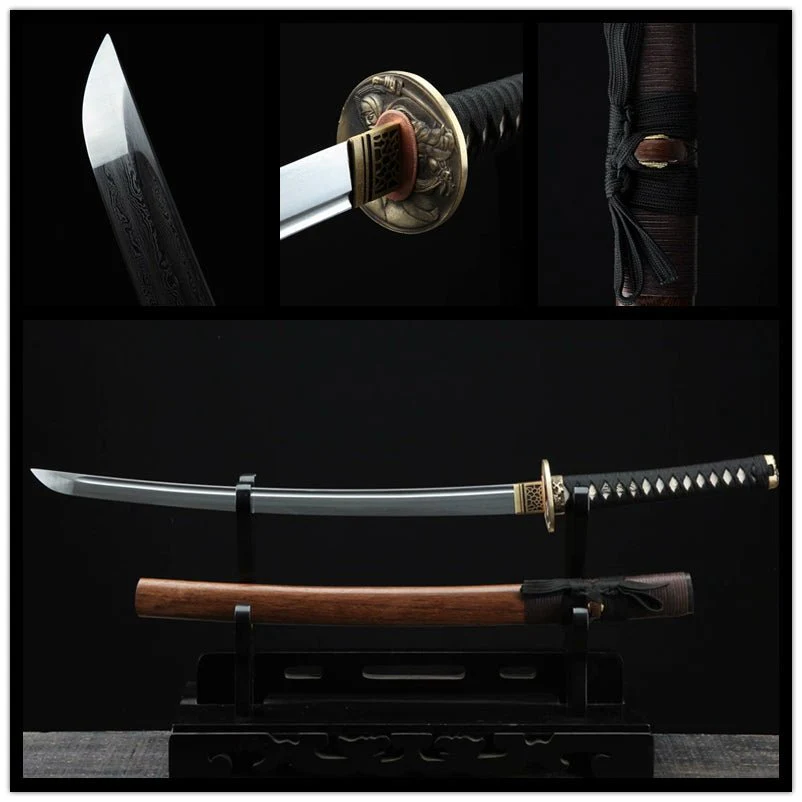
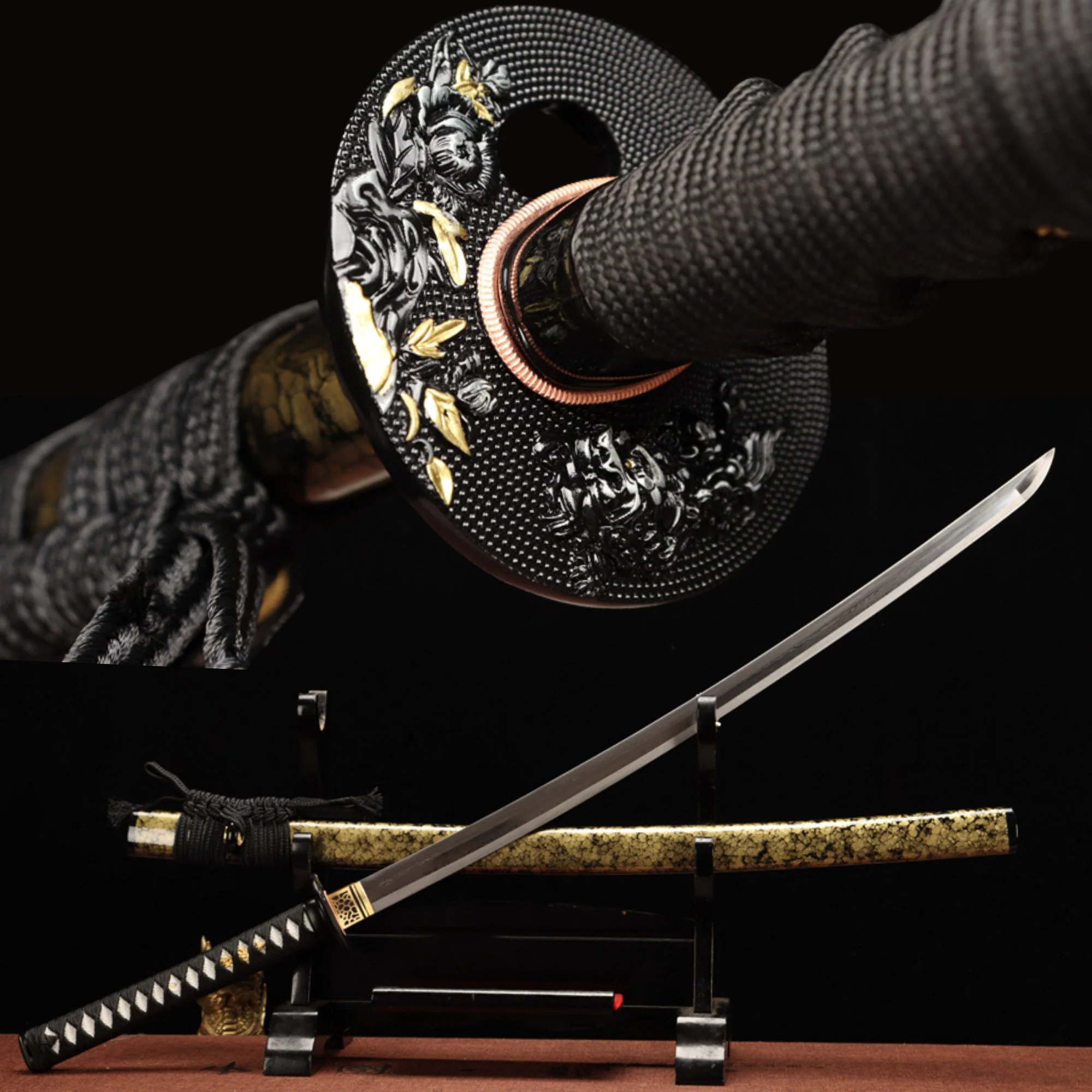
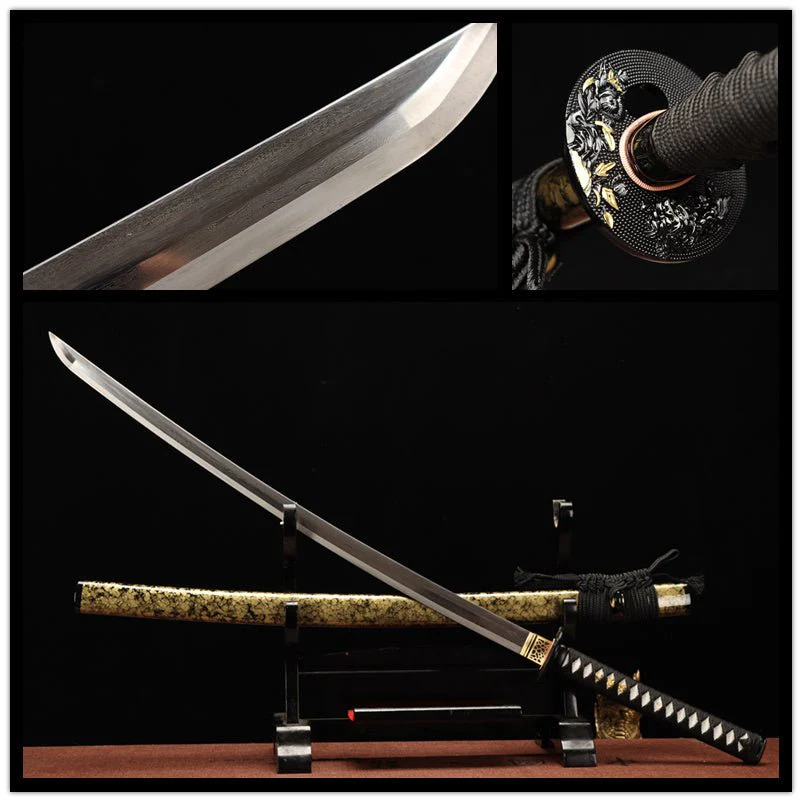
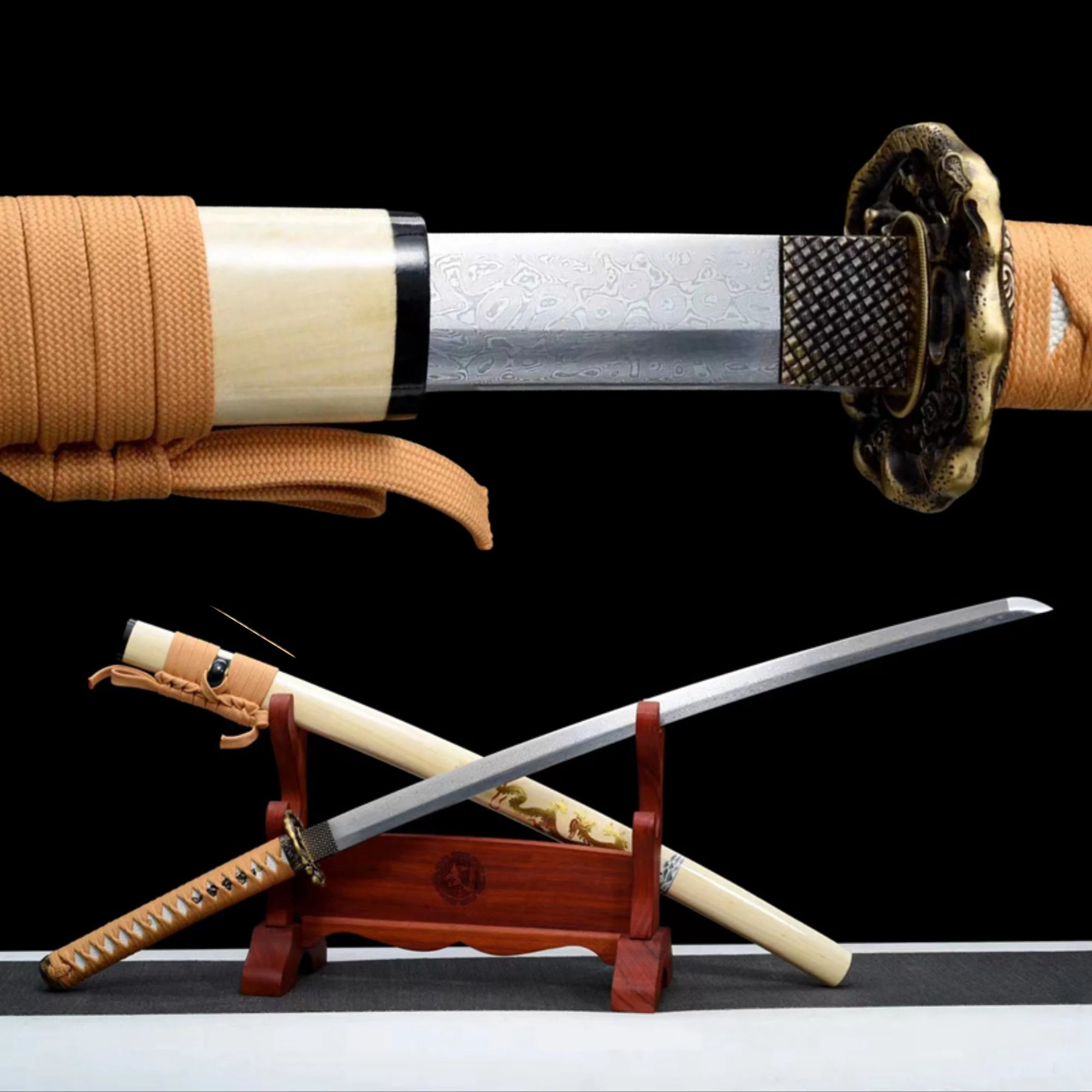
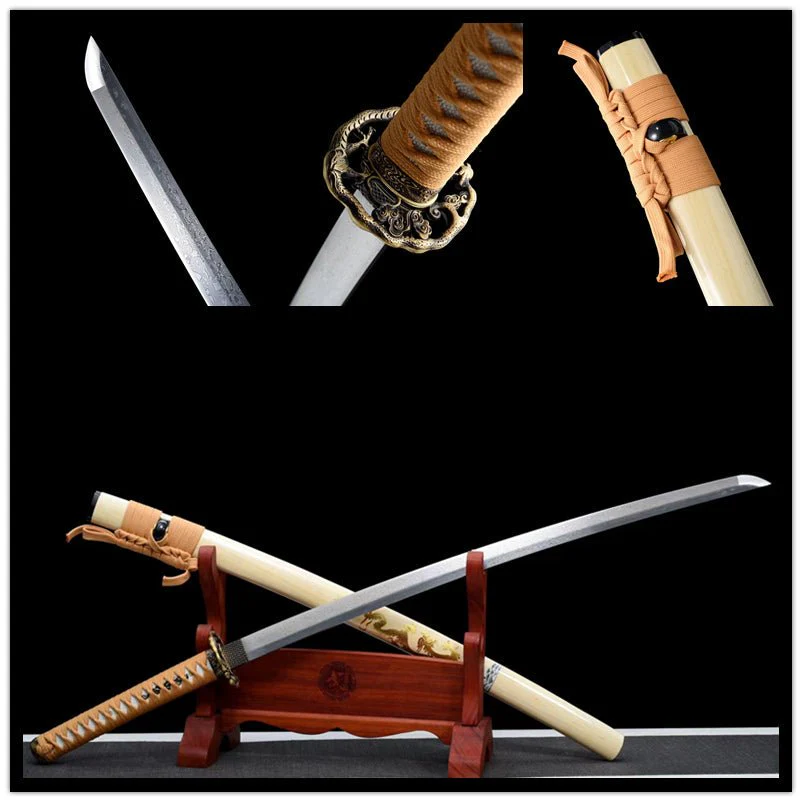
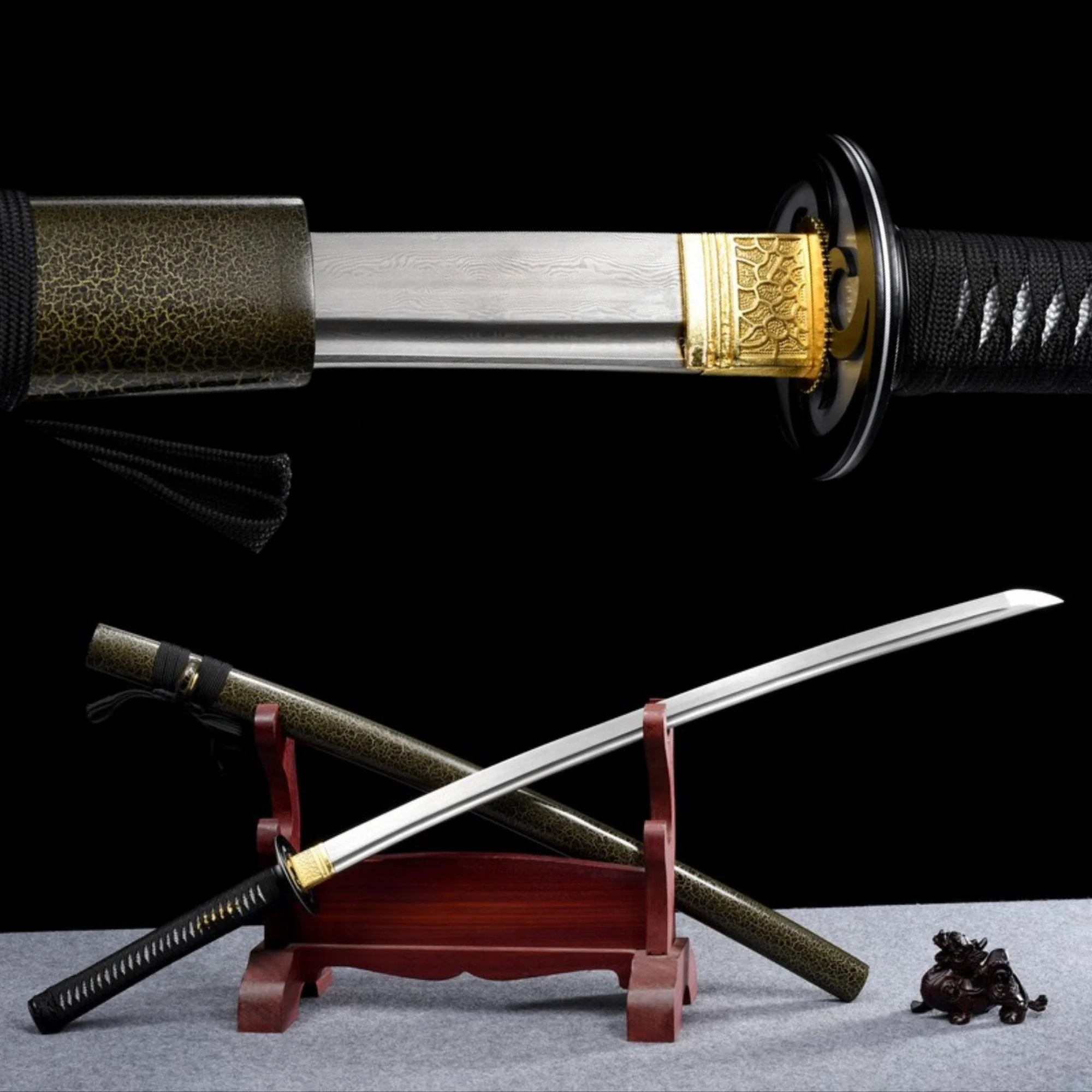
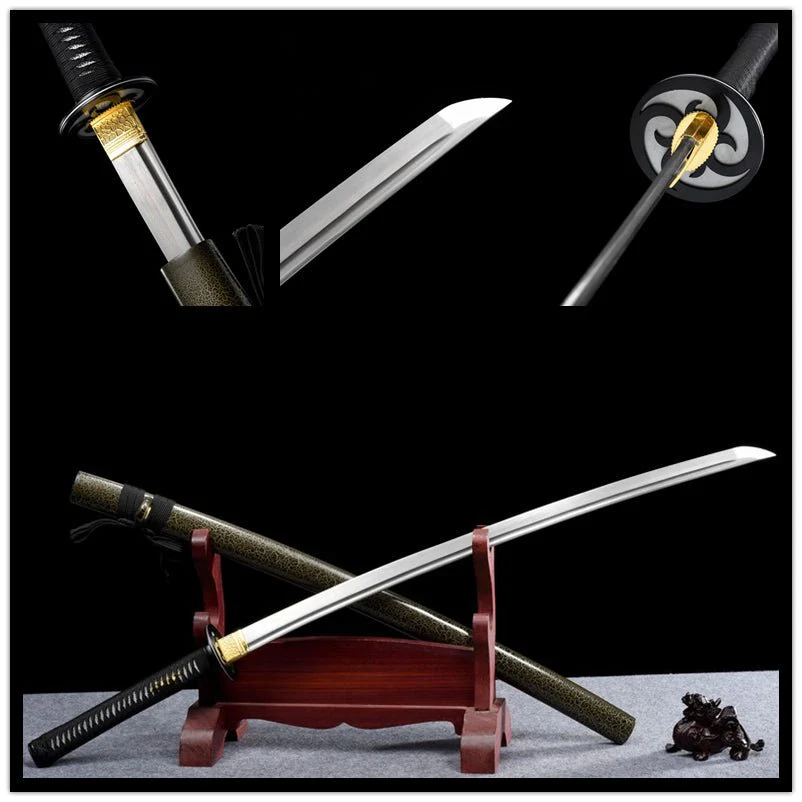
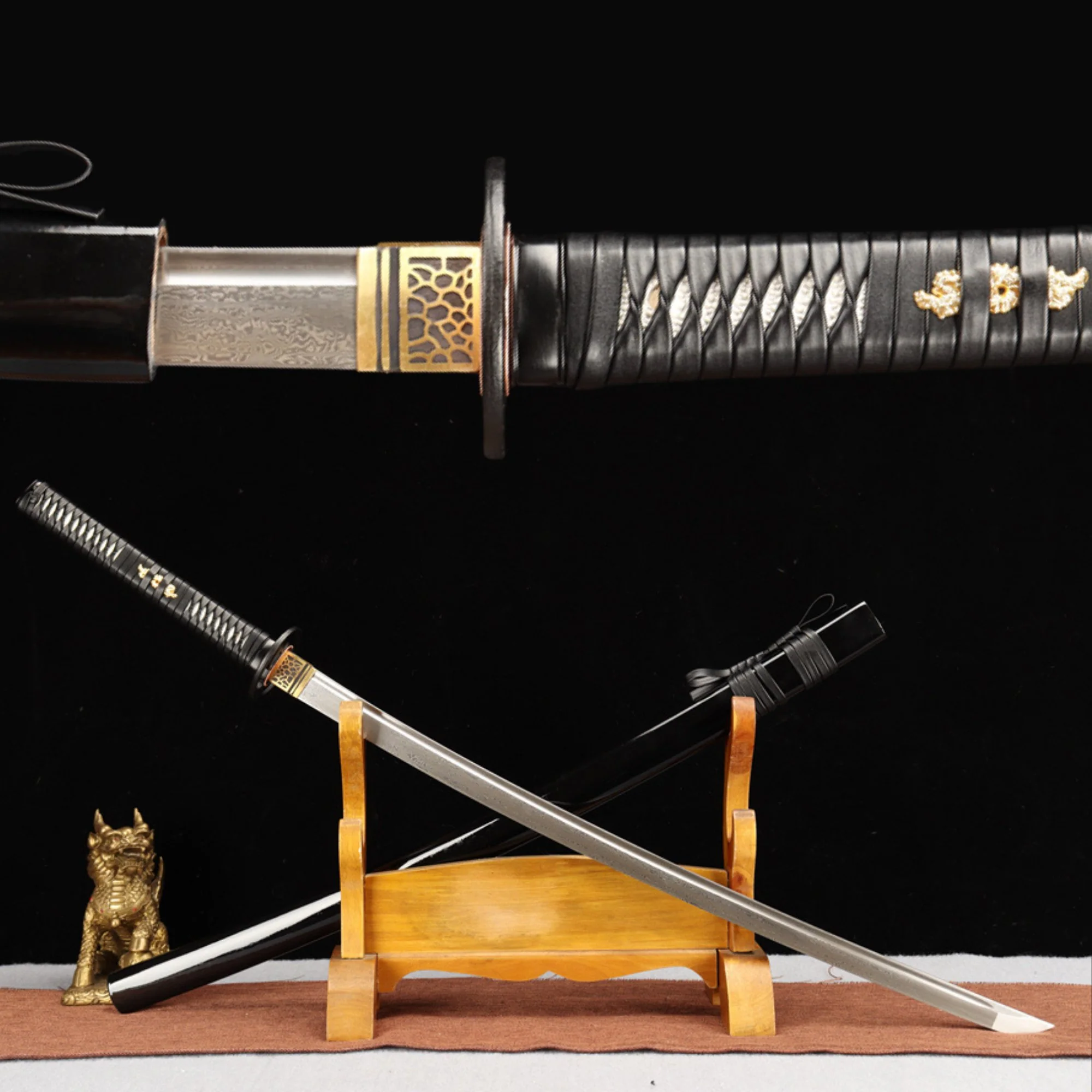
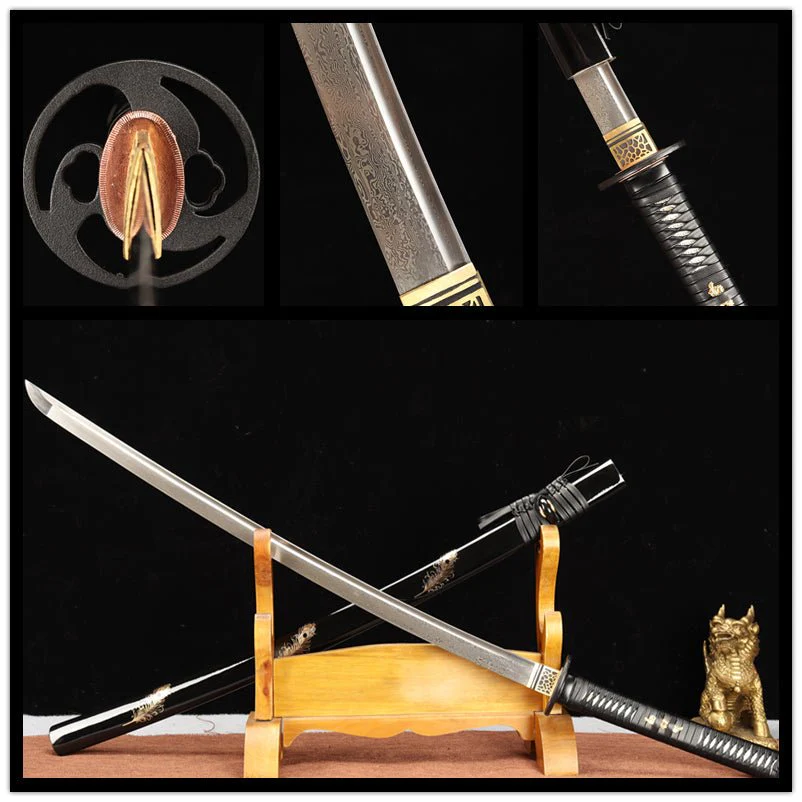
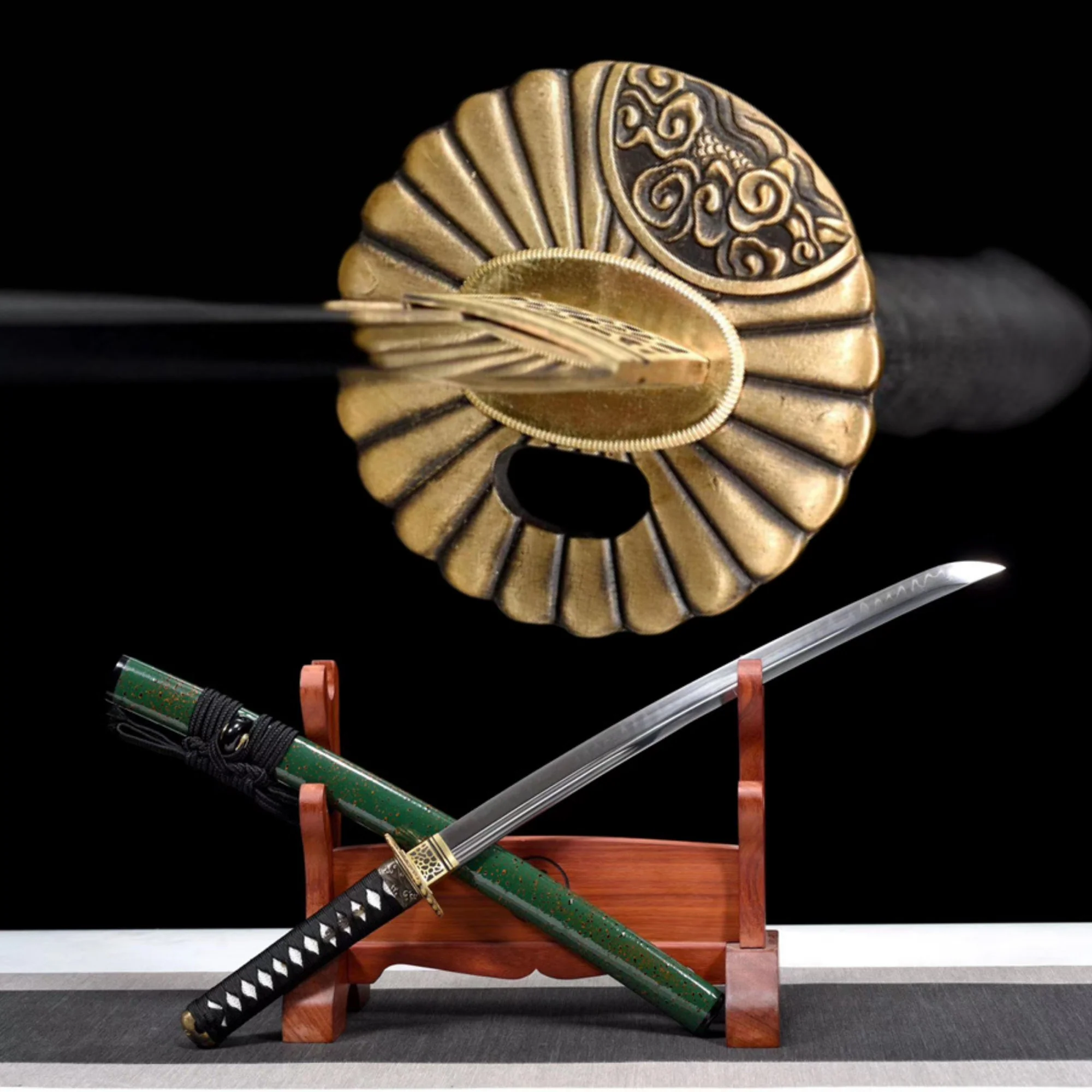
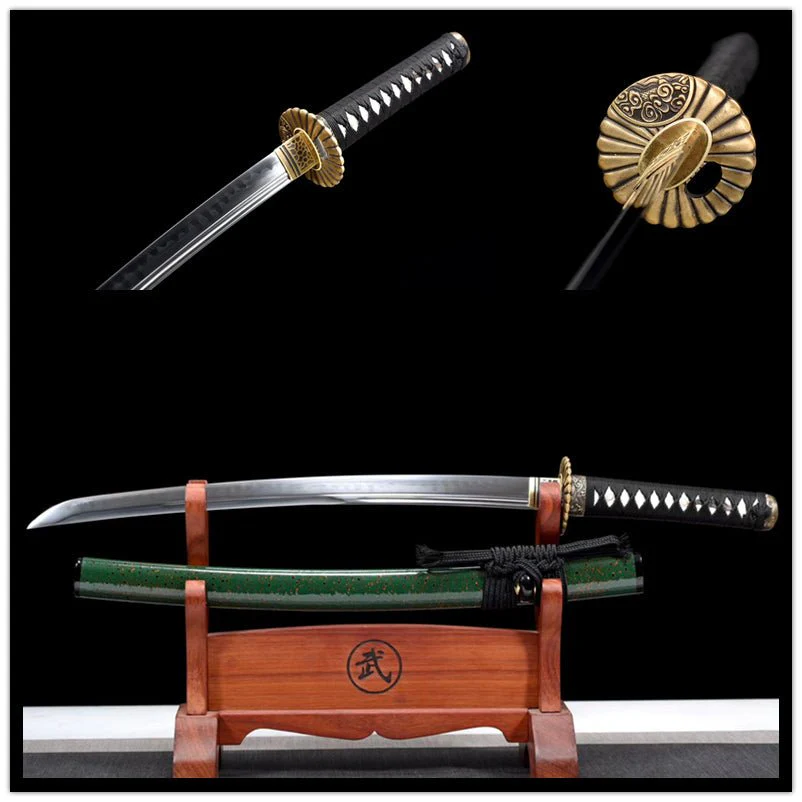
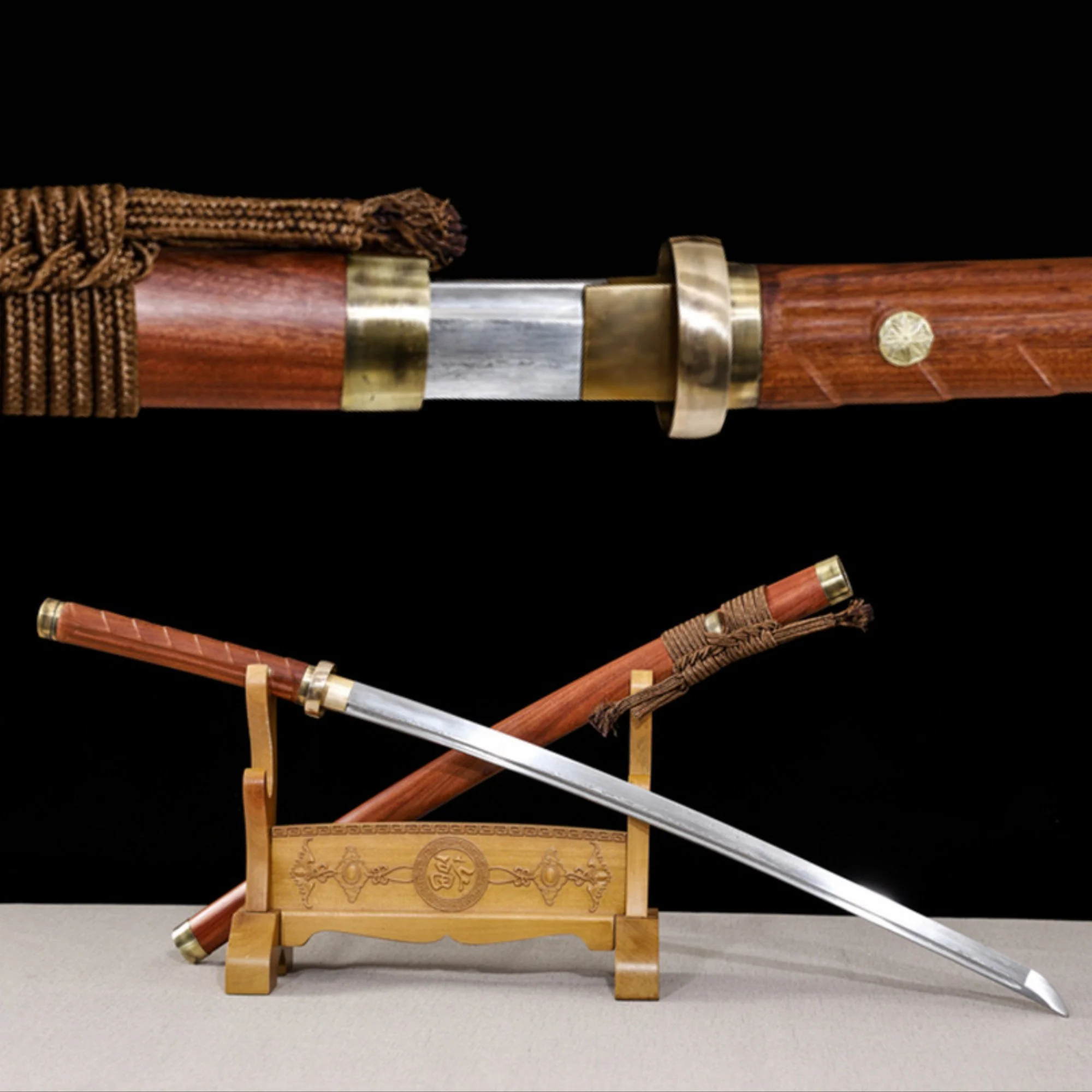
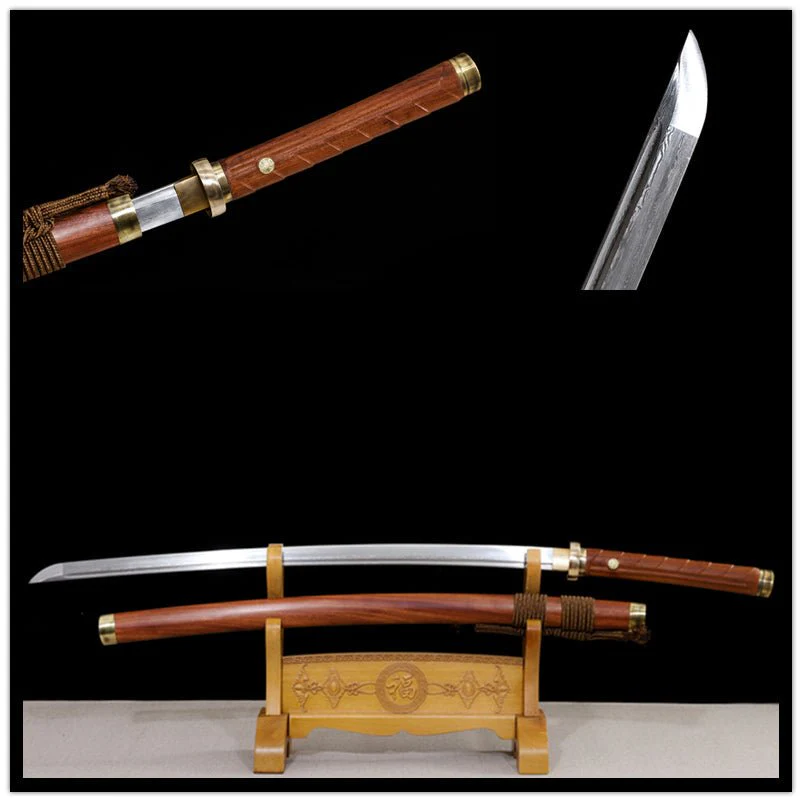
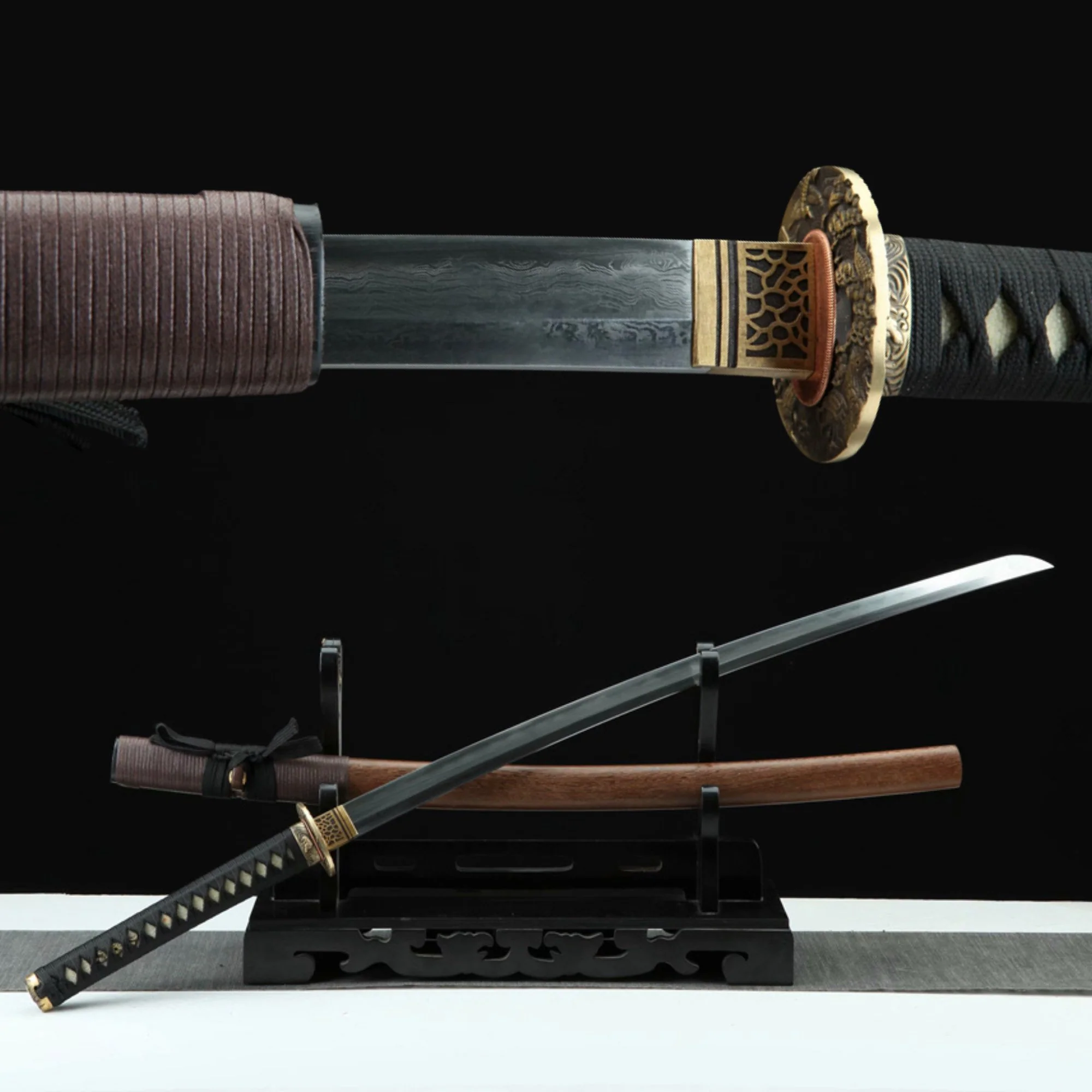
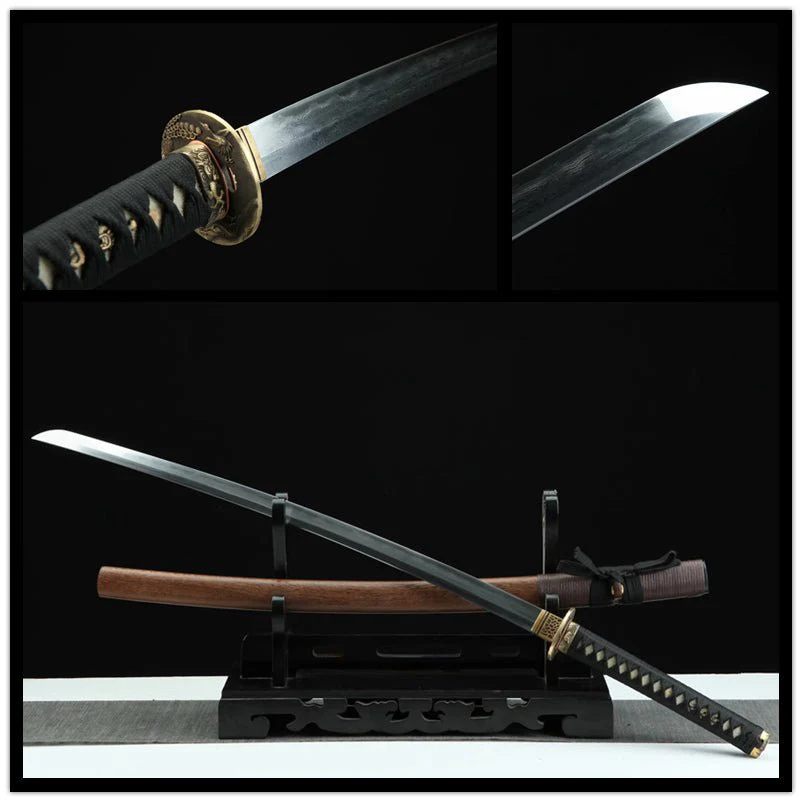
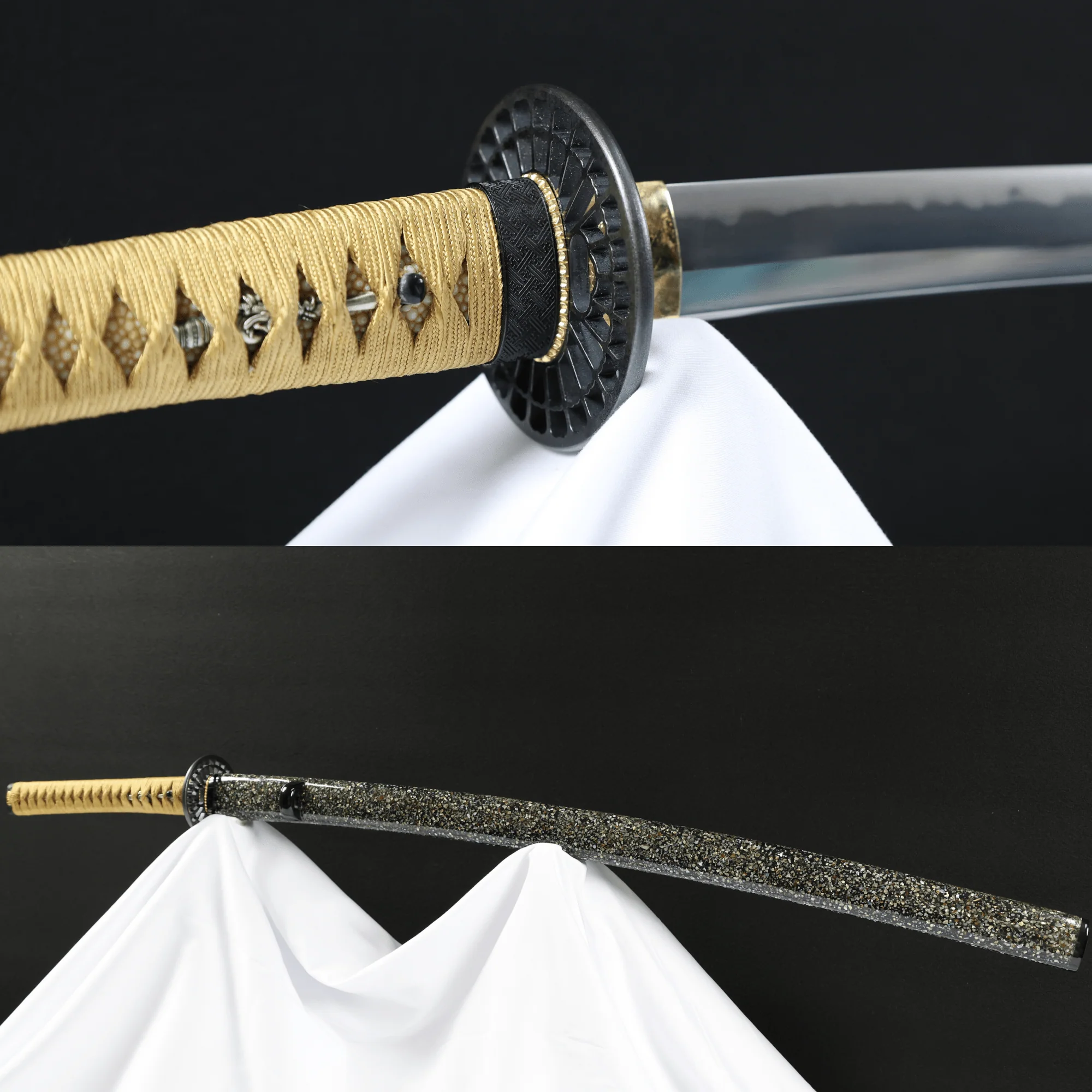
This katana brings together the refinement of traditional craftsmanship and the structural integrity required for practical use. The blade is forged from in-house refined Oroshigane (卸し金) steel in Kobuse-zukuri (甲伏造) construction, with a resilient outer layer encasing a softer core—an approach mirrored in classical tamahagane blades to achieve both toughness and flexibility. Folding produces a mixed Mokume-hada and Masame-hada grain pattern (杢目肌・柾目肌交じり), while polishing reveals a lively Gonome-Midare hamon (互目乱刃文) formed through traditional clay tempering (覆土焼入れ). The blade is shaped with an impressive Ō-kissaki (大切先), adding presence and cutting authority. The saya (鞘) is finished in a full raden-style shell inlay, displaying shimmering multicolored mother-of-pearl across the entire surface, creating a radiant, jewel-like visual effect. The koiguchi, kurigata, and kojiri are reinforced with water buffalo horn for structural strength. The tsuka (柄) features naturally aged, light-yellow samegawa paired with yellow tsuka-ito, tightly wrapped over hishigami (菱紙) for excellent grip and clean, uniform diamonds. The menuki (目貫) are made of white copper, blackened in patina, and crafted in a Sword Dragon (剣龍 / Kenryū) motif that symbolizes strength and guardianship. The fuchi and kashira (縁頭) are white-copper fittings finished in black, adorned with traditional Manji-mon (卍字文) patterns representing eternity and continuity. The tsuba (鍔) is an iron Kuruma-sukashi guard (車輪透鐔) with sekigane inserts, showcasing the iconic openwork wagon-wheel design, completed in a deep traditional blackened patina. Completing the mounting, the habaki (鎺) is crafted from brass and engraved with the classic Nekogaki cat-scratch pattern (猫掻), adding both functional grip and an elegant touch of traditional ornamentation.
TangGu (湯谷) Oroshigane Kobuse Blade
This blade is hand-forged (Tezukuri / 手作り) from in-house refined Oroshigane (卸し金) steel, smelted from satetsu (砂鉄) and repeatedly folded (orikaeshi-tanren / 折り返し鍛錬). Forged in Kobuse-zukuri (甲伏造) construction, this Oroshigane shares the same forging lineage as traditional Tamahagane (玉鋼), achieving comparable performance and structure while allowing the smith to refine the steel’s properties by hand.
Blade Forging Details
-
Blade Name: TangGu Folded Oroshigane Kobuse Blade (甲伏造)
-
Forging Method: This blade is forged in Kobuse-zukuri(甲伏造)style, with a hardened outer layer over a softer iron core. It is differentially hardened using clay tempering(覆土焼入れ), producing a sharp edge, resilient spine, and a visible hamon(刃文).
-
Materials: Oroshigane (卸し金) steel smelted from satetsu (砂鉄), refined in-house using traditional methods(伝統的手法による自家製鋼材)
-
Purpose: Suitable for Kenjutsu and Tameshigiri (test cutting) practice, collection, and display. Unsharpened blades are available for Iaido upon request.
Blade Specifications
- Blade Length (Nagasa刃長): Approx 69 cm
- Handle Length (Tsuka 柄長): Approx. 24 cm
- Width at Base (Motohaba 元幅): Approx. 31 mm
- Thickness at Base (Motokasane 元重): Approx. 6 mm
- Width at Tip (Sakihaba 先幅): Approx. 22 mm
- Thickness at Tip (Sakikasane先重): Approx. 4 mm
- Kissaki Length (Tip 切先長): Approx. 40 mm
- Mekugi-ana (Peg Hole 目釘穴): 1
Blade Characteristics
- Shape: Shinogi-zukuri (ridged blade 鎬造), Iori-mune (flat ridged spine 庵棟), Ō-kissaki (Large tip 大切先)
- Forging Pattern (Hada 鍛肌): Mokume-hada mixed with Masame-hada(杢目肌・柾目肌交じり)— a composite pattern showing wood-grain swirls with straight grain elements, created through repeated folding and layering.
- Temper Line (Hamon 刃文): Gonome-Midare (互目乱刃) — a flowing, irregular temper line characterized by alternating rounded peaks, created through traditional clay tempering (覆土焼入れ).
Special Features and Workmanship
Hi (Groove) Engraving
- Type: Hi-Nashi (樋なし)
- Processing Range: None (No bohi) – Solid blade for added weight and strength
Polishing Work
-
TangGu Polishing Levels:
- Advanced Polish
- Sashikomi Polish
Fittings and Mountings
Blade Fittings
- Tsuba (Handguard 鍔): An iron Kuruma-sukashi tsuba (車輪透鐔) with sekigane inserts, featuring a classic openwork wagon-wheel design. The surface is finished in a deep blackened patina.
- Fuchi-Kashira (縁頭): White-copper fittings finished in a darkened patina, decorated with Manji-mon (卍字文) motifs.
- Menuki (目貫): White-copper menuki, blackened and crafted in the form of a Kenryū (剣龍 Sword Dragon).
- Habaki (鎺): A hand-carved brass habaki engraved with the traditional Nekogaki (Cat-scratch / 猫掻) pattern.
- Samegawa (Ray Skin 柄鮫): Genuine ray skin in a naturally aged, light-yellow finish.
- Handle Wrapping (柄巻): Yellow silk (or cotton) tsuka-ito, tightly wrapped over hishigami for clean, uniform diamonds.
Saya and Accessories
- Saya (Scabbard 鞘): Traditional-style design reinforced with water buffalo horn at the koiguchi (mouth), kojiri (end), and kurigata (cord knob).
- Saya Lacquer (鞘塗): Finished in a full raden-style shell inlay, featuring shimmering, multicolored mother-of-pearl pieces set across the entire scabbard surface.
- Sageo (Cord 下緒): Japanese-made sageo available in multiple colors
Measurements
- Blade Weight: Approx. 0.65 kg
- Sword Weight (without Saya): Approx. 1.0 kg
- Total Weight: Approx. 1.35 kg
- Overall Length: Approx. 100 mm


Folded Oroshigane Steel Shinken (真剣) | Radiant Wheel Katana: TangGu (湯谷) Oroshigane (卸し金) Kobuse Blade (甲伏造) + TangGu (湯谷) Kōrin Koshirae (光輪拵)
This katana brings together the refinement of traditional craftsmanship and the structural integrity required for practical use. The blade is forged from in-house refined Oroshigane (卸し金) steel in Kobuse-zukuri (甲伏造) construction, with a resilient outer layer encasing a softer core—an approach mirrored in classical tamahagane blades to achieve both toughness and flexibility. Folding produces a mixed Mokume-hada and Masame-hada grain pattern (杢目肌・柾目肌交じり), while polishing reveals a lively Gonome-Midare hamon (互目乱刃文) formed through traditional clay tempering (覆土焼入れ). The blade is shaped with an impressive Ō-kissaki (大切先), adding presence and cutting authority. The saya (鞘) is finished in a full raden-style shell inlay, displaying shimmering multicolored mother-of-pearl across the entire surface, creating a radiant, jewel-like visual effect. The koiguchi, kurigata, and kojiri are reinforced with water buffalo horn for structural strength. The tsuka (柄) features naturally aged, light-yellow samegawa paired with yellow tsuka-ito, tightly wrapped over hishigami (菱紙) for excellent grip and clean, uniform diamonds. The menuki (目貫) are made of white copper, blackened in patina, and crafted in a Sword Dragon (剣龍 / Kenryū) motif that symbolizes strength and guardianship. The fuchi and kashira (縁頭) are white-copper fittings finished in black, adorned with traditional Manji-mon (卍字文) patterns representing eternity and continuity. The tsuba (鍔) is an iron Kuruma-sukashi guard (車輪透鐔) with sekigane inserts, showcasing the iconic openwork wagon-wheel design, completed in a deep traditional blackened patina. Completing the mounting, the habaki (鎺) is crafted from brass and engraved with the classic Nekogaki cat-scratch pattern (猫掻), adding both functional grip and an elegant touch of traditional ornamentation.
TangGu (湯谷) Oroshigane Kobuse Blade
This blade is hand-forged (Tezukuri / 手作り) from in-house refined Oroshigane (卸し金) steel, smelted from satetsu (砂鉄) and repeatedly folded (orikaeshi-tanren / 折り返し鍛錬). Forged in Kobuse-zukuri (甲伏造) construction, this Oroshigane shares the same forging lineage as traditional Tamahagane (玉鋼), achieving comparable performance and structure while allowing the smith to refine the steel’s properties by hand.
Blade Forging Details
-
Blade Name: TangGu Folded Oroshigane Kobuse Blade (甲伏造)
-
Forging Method: This blade is forged in Kobuse-zukuri(甲伏造)style, with a hardened outer layer over a softer iron core. It is differentially hardened using clay tempering(覆土焼入れ), producing a sharp edge, resilient spine, and a visible hamon(刃文).
-
Materials: Oroshigane (卸し金) steel smelted from satetsu (砂鉄), refined in-house using traditional methods(伝統的手法による自家製鋼材)
-
Purpose: Suitable for Kenjutsu and Tameshigiri (test cutting) practice, collection, and display. Unsharpened blades are available for Iaido upon request.
Blade Specifications
- Blade Length (Nagasa刃長): Approx 69 cm
- Handle Length (Tsuka 柄長): Approx. 24 cm
- Width at Base (Motohaba 元幅): Approx. 31 mm
- Thickness at Base (Motokasane 元重): Approx. 6 mm
- Width at Tip (Sakihaba 先幅): Approx. 22 mm
- Thickness at Tip (Sakikasane先重): Approx. 4 mm
- Kissaki Length (Tip 切先長): Approx. 40 mm
- Mekugi-ana (Peg Hole 目釘穴): 1
Blade Characteristics
- Shape: Shinogi-zukuri (ridged blade 鎬造), Iori-mune (flat ridged spine 庵棟), Ō-kissaki (Large tip 大切先)
- Forging Pattern (Hada 鍛肌): Mokume-hada mixed with Masame-hada(杢目肌・柾目肌交じり)— a composite pattern showing wood-grain swirls with straight grain elements, created through repeated folding and layering.
- Temper Line (Hamon 刃文): Gonome-Midare (互目乱刃) — a flowing, irregular temper line characterized by alternating rounded peaks, created through traditional clay tempering (覆土焼入れ).
Special Features and Workmanship
Hi (Groove) Engraving
- Type: Hi-Nashi (樋なし)
- Processing Range: None (No bohi) – Solid blade for added weight and strength
Polishing Work
-
TangGu Polishing Levels:
- Advanced Polish
- Sashikomi Polish
Fittings and Mountings
Blade Fittings
- Tsuba (Handguard 鍔): An iron Kuruma-sukashi tsuba (車輪透鐔) with sekigane inserts, featuring a classic openwork wagon-wheel design. The surface is finished in a deep blackened patina.
- Fuchi-Kashira (縁頭): White-copper fittings finished in a darkened patina, decorated with Manji-mon (卍字文) motifs.
- Menuki (目貫): White-copper menuki, blackened and crafted in the form of a Kenryū (剣龍 Sword Dragon).
- Habaki (鎺): A hand-carved brass habaki engraved with the traditional Nekogaki (Cat-scratch / 猫掻) pattern.
- Samegawa (Ray Skin 柄鮫): Genuine ray skin in a naturally aged, light-yellow finish.
- Handle Wrapping (柄巻): Yellow silk (or cotton) tsuka-ito, tightly wrapped over hishigami for clean, uniform diamonds.
Saya and Accessories
- Saya (Scabbard 鞘): Traditional-style design reinforced with water buffalo horn at the koiguchi (mouth), kojiri (end), and kurigata (cord knob).
- Saya Lacquer (鞘塗): Finished in a full raden-style shell inlay, featuring shimmering, multicolored mother-of-pearl pieces set across the entire scabbard surface.
- Sageo (Cord 下緒): Japanese-made sageo available in multiple colors
Measurements
- Blade Weight: Approx. 0.65 kg
- Sword Weight (without Saya): Approx. 1.0 kg
- Total Weight: Approx. 1.35 kg
- Overall Length: Approx. 100 mm
Description
Folded Oroshigane Steel Shinken (真剣) | Radiant Wheel Katana: TangGu (湯谷) Oroshigane (卸し金) Kobuse Blade (甲伏造) + TangGu (湯谷) Kōrin Koshirae (光輪拵)
This katana brings together the refinement of traditional craftsmanship and the structural integrity required for practical use. The blade is forged from in-house refined Oroshigane (卸し金) steel in Kobuse-zukuri (甲伏造) construction, with a resilient outer layer encasing a softer core—an approach mirrored in classical tamahagane blades to achieve both toughness and flexibility. Folding produces a mixed Mokume-hada and Masame-hada grain pattern (杢目肌・柾目肌交じり), while polishing reveals a lively Gonome-Midare hamon (互目乱刃文) formed through traditional clay tempering (覆土焼入れ). The blade is shaped with an impressive Ō-kissaki (大切先), adding presence and cutting authority. The saya (鞘) is finished in a full raden-style shell inlay, displaying shimmering multicolored mother-of-pearl across the entire surface, creating a radiant, jewel-like visual effect. The koiguchi, kurigata, and kojiri are reinforced with water buffalo horn for structural strength. The tsuka (柄) features naturally aged, light-yellow samegawa paired with yellow tsuka-ito, tightly wrapped over hishigami (菱紙) for excellent grip and clean, uniform diamonds. The menuki (目貫) are made of white copper, blackened in patina, and crafted in a Sword Dragon (剣龍 / Kenryū) motif that symbolizes strength and guardianship. The fuchi and kashira (縁頭) are white-copper fittings finished in black, adorned with traditional Manji-mon (卍字文) patterns representing eternity and continuity. The tsuba (鍔) is an iron Kuruma-sukashi guard (車輪透鐔) with sekigane inserts, showcasing the iconic openwork wagon-wheel design, completed in a deep traditional blackened patina. Completing the mounting, the habaki (鎺) is crafted from brass and engraved with the classic Nekogaki cat-scratch pattern (猫掻), adding both functional grip and an elegant touch of traditional ornamentation.
TangGu (湯谷) Oroshigane Kobuse Blade
This blade is hand-forged (Tezukuri / 手作り) from in-house refined Oroshigane (卸し金) steel, smelted from satetsu (砂鉄) and repeatedly folded (orikaeshi-tanren / 折り返し鍛錬). Forged in Kobuse-zukuri (甲伏造) construction, this Oroshigane shares the same forging lineage as traditional Tamahagane (玉鋼), achieving comparable performance and structure while allowing the smith to refine the steel’s properties by hand.
Blade Forging Details
-
Blade Name: TangGu Folded Oroshigane Kobuse Blade (甲伏造)
-
Forging Method: This blade is forged in Kobuse-zukuri(甲伏造)style, with a hardened outer layer over a softer iron core. It is differentially hardened using clay tempering(覆土焼入れ), producing a sharp edge, resilient spine, and a visible hamon(刃文).
-
Materials: Oroshigane (卸し金) steel smelted from satetsu (砂鉄), refined in-house using traditional methods(伝統的手法による自家製鋼材)
-
Purpose: Suitable for Kenjutsu and Tameshigiri (test cutting) practice, collection, and display. Unsharpened blades are available for Iaido upon request.
Blade Specifications
- Blade Length (Nagasa刃長): Approx 69 cm
- Handle Length (Tsuka 柄長): Approx. 24 cm
- Width at Base (Motohaba 元幅): Approx. 31 mm
- Thickness at Base (Motokasane 元重): Approx. 6 mm
- Width at Tip (Sakihaba 先幅): Approx. 22 mm
- Thickness at Tip (Sakikasane先重): Approx. 4 mm
- Kissaki Length (Tip 切先長): Approx. 40 mm
- Mekugi-ana (Peg Hole 目釘穴): 1
Blade Characteristics
- Shape: Shinogi-zukuri (ridged blade 鎬造), Iori-mune (flat ridged spine 庵棟), Ō-kissaki (Large tip 大切先)
- Forging Pattern (Hada 鍛肌): Mokume-hada mixed with Masame-hada(杢目肌・柾目肌交じり)— a composite pattern showing wood-grain swirls with straight grain elements, created through repeated folding and layering.
- Temper Line (Hamon 刃文): Gonome-Midare (互目乱刃) — a flowing, irregular temper line characterized by alternating rounded peaks, created through traditional clay tempering (覆土焼入れ).
Special Features and Workmanship
Hi (Groove) Engraving
- Type: Hi-Nashi (樋なし)
- Processing Range: None (No bohi) – Solid blade for added weight and strength
Polishing Work
-
TangGu Polishing Levels:
- Advanced Polish
- Sashikomi Polish
Fittings and Mountings
Blade Fittings
- Tsuba (Handguard 鍔): An iron Kuruma-sukashi tsuba (車輪透鐔) with sekigane inserts, featuring a classic openwork wagon-wheel design. The surface is finished in a deep blackened patina.
- Fuchi-Kashira (縁頭): White-copper fittings finished in a darkened patina, decorated with Manji-mon (卍字文) motifs.
- Menuki (目貫): White-copper menuki, blackened and crafted in the form of a Kenryū (剣龍 Sword Dragon).
- Habaki (鎺): A hand-carved brass habaki engraved with the traditional Nekogaki (Cat-scratch / 猫掻) pattern.
- Samegawa (Ray Skin 柄鮫): Genuine ray skin in a naturally aged, light-yellow finish.
- Handle Wrapping (柄巻): Yellow silk (or cotton) tsuka-ito, tightly wrapped over hishigami for clean, uniform diamonds.
Saya and Accessories
- Saya (Scabbard 鞘): Traditional-style design reinforced with water buffalo horn at the koiguchi (mouth), kojiri (end), and kurigata (cord knob).
- Saya Lacquer (鞘塗): Finished in a full raden-style shell inlay, featuring shimmering, multicolored mother-of-pearl pieces set across the entire scabbard surface.
- Sageo (Cord 下緒): Japanese-made sageo available in multiple colors
Measurements
- Blade Weight: Approx. 0.65 kg
- Sword Weight (without Saya): Approx. 1.0 kg
- Total Weight: Approx. 1.35 kg
- Overall Length: Approx. 100 mm